HOM:

Giving you something to read on the toilet since 2009.

"The mistake lies in seeing debate and discussion as secondary to the recovery of meaning. Rather, we should see them as primary: art and literature do not exist to be understood or appreciated, but to be discussed and argued over, to function as a focus for social dialogue. The discourse of literary or art criticism is not to recover meaning, but to create and contest it. Our primal scene should not be the solitary figure in the dark of the cinema but the group of friends arguing afterwards in the pub."
-Don Fowler (1996) "Even Better Than The Real Thing"

Friday, February 1, 2013

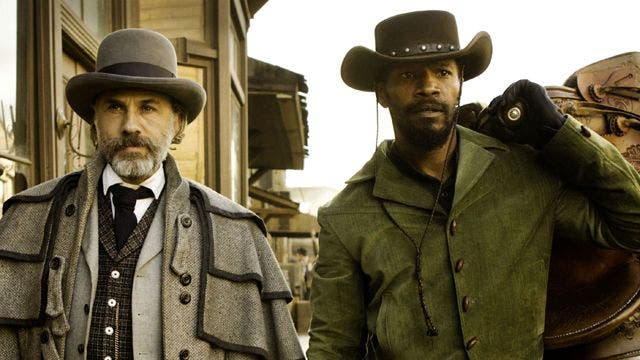
Django - Nell

If you ever needed proof that Quentin Tarantino can put on a show (or that he can’t really act), Django Unchained is it. ‘Intense’ doesn’t come close. It’s less a movie, and more like entering the circus for three hours (not helped by the fact it was so hot in the cinema it resembled the temperature of a circus tent at the end of a very long week). Visually arresting, loud, brash, emotionally draining – Django Unchained is an assault on the senses. A depiction of an abhorrent moment in history, and a comedy. Who else but Tarantino?

I think it’s probably fair to say that most fans won’t be disappointed. This is 70% spaghetti western, 15% history lesson, 10% comic book, 5% hip hop. Exactly. However, it is also a movie, and a subject matter, that has been given the Hollywood treatment. Which means there are no great surprises (actually I am struggling to recall any), the pressure never lets up, and it is very glossy (OK so they gave some very pretty actors bad teeth but I think a historian might have something to say about almost everything else). And of course, it has caused plenty of controversy.

If anyone else were to attempt a film about slavery it would be a serious drama. Painful, gritty, challenging, probably unwatchable. Although Tarantino doesn’t shy away from some of the realities of the subject matter, and there are some truly gruesome scenes which I won’t ever forget, there is a certain detachment from the true pain of it – a Tarantino sheen - and consequently the really hard questions aren’t ever quite asked. As you would expect there’s a lot of violence, but it barely touches on the emotional or psychological trauma. Perhaps this is because the world in which Django’s story takes place is hugely stylised, and that exaggeration removes the final bite of reality.

As a piece of film making this movie is immense in almost every imaginable sense. The characters border on caricatures – for example Leo plays ‘Monsieur Candie’ the proprietor of Candyland, complete with eccentric outfit, long cigarette and a mad glint in his eye – it’s almost the evil Mad Hatter. All the leads pull it off – Christoph Waltz in particular stood out for me – and the exaggerated characterisation fits the style of the film. However, their two dimensional depiction means you never achieve a real engagement with them, you don’t get inside their heads. The most affecting and memorable moments are the horrible acts of violence against minor characters and not our heroes story. Consequently the brutal world which they inhabit is always kept at arms’ length, and the unbearable is made watchable. To me, that rings a little of cheating.

The soundtrack is huge. It’s in your face, overbearing and very entertaining - a mash up of traditional Western riffs and a bit of hip hop (used cleverly at times – unless I’m reading too deep, it acknowledges social changes and contemporary cultural interpretations which are not spoken in the script). The production design is also remarkable - the sheer intensity of colour throughout is impressive and I think I can remember every costume, when does that happen? This all adds enormously to the sense of drama and recalling the film now (at 3am and maybe 10 hours and several glasses of wine after I saw it), it feels like stepping back into the madhouse. That’s not the wine talking - this film is just so....BIG. And I can’t remember the cinema feeling like that for some time.

That isn’t to say there isn’t a serious side to the movie and some of the best moments for me are when Tarantino challenges the audience; using the characters to lead you to a point where you suddenly realise you are uncomfortable; making you question what it’s OK to laugh at; pointing out the indelible footprint of this era on contemporary America...He is also adept at making characters that endorse the status quo appear crushingly stupid, so blinded by their meaningless positions of power, almost deranged in their condoning of slavery - although at times that makes them comical, which again (inappropriately?) lifts the mood on a very, very heavy subject matter. Perhaps one of the most interesting questions he asks of us is in the role played by a barely recognisable Samuel L. Jackson, I don’t want to give away too much, but his part in Django’s story touches on some challenging, and timeless, human characteristics. Ultimately though, these issues are acknowledged and not addressed - but then the spaghetti western is hardly known for its delicacy in dealing with debates on human rights, the shadow of history or the brutal truth of human nature...

I want to say that I really loved this film, and on one level I did. As a piece of film making I think it is pretty incredible – the cast are brilliant, the direction is spot on, it’s genuinely laugh out loud funny, it is truly an ‘experience’. Whether this is an acceptable way in which to make a film about slavery, well, that’s an entirely different question - one which is sparking a lot of debate – and as the power of the cinema experience fades it seems there are elements that I am increasingly uneasy with. One thing I would say is that I think Quentin Tarantino may be the only director out there who could have got away with it.
 

Monday, December 3, 2012

Best Camps in Film


The Stage:

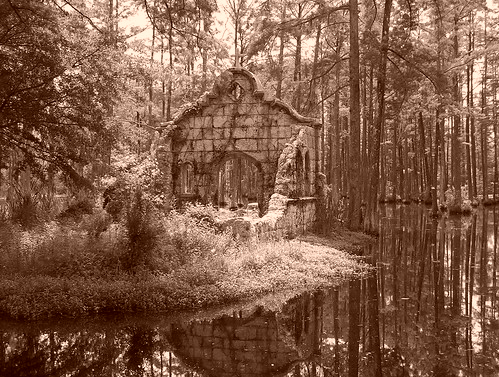
Sherwood Forest, Swiss Family Robinson's canopy palace, Ferngully, Neverland's Lost Boy treehouse, and other "camps" are seared into our collective memories of what it was like to be a child driven by aspirations for life in perpetual makeshift. There, in these camps, we'd take pride in and nap beneath our bamboo wind-chimes. Leaving home for an early morning hunt would require rope swinging from our cabin in a well-concealed sycamore branch. We'd scamper through trees to a friend's house on canopy walkways. There'd be nervous moments hiding in camouflaged cellars awaiting ruthless tax collectors. Life would be basic, organic, and exciting.


These orchestrated, need-based earthy existences would substantiate our thousands of hours of longing for endless days in the forts of our youth--an amateur archeologist working behind Johnny's house could easily unearth the foundations of some of these forts. One could gather and chart piecemeal relics of mud-ball fights to tell a grand story of our epic battles. 

(We're sad to report that the 'wood's' behind Johnny's house and Ryan's house have both been razed for bland condo complexes. If only those now residing there, watching Survivor and Dancing With The Stars, knew how impressive the land beneath their drywall was. It's a land laden with heroic tales of treachery, life-altering loss, and grass-stained solidarity. If they knew, maybe they'd flip off the television and pick up their high school copy of Huck Finn.) 

In these dwellings oozing with 'place', Mom calling us home for supper would never mean returning from paradise, it would necessitate staying. We'd kill animals for sustenance and challenge each other to stick fights atop waterfalls. Pirates would always be roaming. Though they may claim a few of our comrades we'd always come away the victors. To honor our fallen we'd play Amazing Grace on the bagpipes at outdoor funerals. Mass would be read in latin by our drinking-priest. These solemn nights would end in food fights and excessive imbibing around campfires. Deadline-less gatherings for sacraments would be the norm. 

In these utopias there are no front doors to leave open. There is no need to wipe your feet and no need to 'clean-up'. There are no corporate headquarters, no copy rooms, no quarterly earnings, no faculty meetings, no electronic mail, no stale office coffee--only boundless wilderness and days spent reminiscing on or preparing for battle. 

These are the hopes and dreams of generations of 'lost boys and girls'--those of us with wildness in our hearts and suburbia in our midst. We've noticed this about ourselves and felt compelled to rank the best camps in cinema history. Those that elicit the most intense desire of "wanting-to-belong-to" are those that rise to the top of the list. As there are a multitude of camps in cinema history it becomes necessary to lay ground rules. We must answer some central questions. 
 
What is a camp and what is not a camp? Is a lair a camp? Is a fort a camp? How long must one reside in a location before that place becomes the camp

The Parameters

There are a whole slew of elements that determine a camp's place on this list. Set out here are characteristics that emerge in all or most of the camps we've listed. There are other things to consider, no doubt. But these seem to be at the forefront of any listing of the great camps of film. Notably we do not discriminate on a camp's raison d'etre. We are egalitarian in our hashing out of what makes and resembles a 'good' camp. Those camps that house 'bad guys' have a place here.


In no particular order:

a) There must be an enemy, preferably pirates.

b) You must intend to stay though you may have originally not intended to do so.

c) Out-of-doors trumps in-doors.

d) Living off the land trumps smuggling.

e) Being forced to retreat to the fringes because of a ruthless tyrant trumps doing what generations before you have done.

f) In the case of Native tribes--though to them it is simply living how they always live, for our sake, we deem their abodes as camps, as they are not suburban streets--there was no urban planning.

g) Likelihood of lasting

h) Amount of ingenuity

i) Amount of creativity

j) Amount of usefullness

k) Amount of resourcefullness

l) Amount of resolve that went into crafting

m) Overall aesthetics

n) Deftness in the crafting of weaponry (preferably handmade)

o) Quality of barriers to entry

p) Placement and amiable-ness of guards or watchmen (undoubtedly, one should place the 'comedian' on watch so   as to create a sense of angst amongst comic relief). 

q) Amount and use of tree cover

r) Bonus points awarded for the following: women and men working alongside each other, the presence of dogs and pets, unique or homemade alcohol. 

The List:

We've found it best to group in tiers as it's nearly impossible for one to assert that Robin Hood's camp is better than the Lost Boy's camp--they are different yet deserve a spot on a similar level. Also, one should not take being 'C-Listed' as a knock. After all, this is a list of the best in film history. Being notched in a third tier is hardly insulting. To make this list is to be given the highest honor. 

A-List:

Swiss Family Robinson - The Canopy Palace

The impetus for this list. The world would be a better place if we were all permitted the opportunity to circle around Mrs. Robinson and sing Christmas carols after a hard days work prepping for an imminent battle with pirates. No film has fostered such strong desires to be adopted as this one. We'll forever consider ourselves surrogate children of the sturdy, tried and true Robinson's. 

Robin Hood Prince of Thieves - Sherwood Forest

Arguably the greatest camp the world has ever seen. No person in their right mind has watched this film without wanting to be amongst the most noble and rustic camp builders this side of the Thames River. Our deepest thanks go out to all that made this film possible--you've realized dreams.

Neverland - Lost Boys Treehouse

Childhood was not complete until the film Hook was released. Millions of Lost Boys have since chanted, "Roofio, Roofio, Roofio, Roof--I--oooooo!"

B-List:

Ferngully - Deep in Paradise

Laying the groundwork for an environmental sentiment in this generation of urban greens, Ferngully took us to an oasis and rightfully challenged our oasis with pirates that we can relate to--condo/stripmall land developers. One could argue that those of us compiling this list recycle and compost only to assuage our discomfort first realized in the gelatinous pirate, aptly named, Hexxus.

Red Dawn - Avenging Under Swayze's Wing

In all our youthful exuberance, we secretly long for communists to invade again. RIP Swayze. "Turn it into something else!"

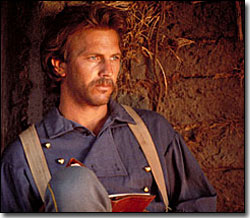
Dances With Wolves - Costner's Getaway

Notably Kevin Costner makes his second appearance on this list (not his last). He's still out on the prairie having relations with hybrid natives as far as we're concerned. 

I Am Legend - A Single Man 

Will Smith makes an unlikely appearance here. Regardless, his homemaking skills in the face of gnarly amounts of adversity get him a well deserved nod and spot on the B-List. 

Castaway - A Lonely Man

What's a film list without Tom Hanks? Angst and patience are two things that undergird any solid camp. Heaping doses of each abound in this underrated camp-based film. We're still proud of him for getting off that island but we recognize how hard it must have been to give up all that he had built. We'd gladly spend a few years marooned on that island. 

Defiance - A Real Life Sherwood

"No way! Really?" That's us after seeing Defiance. "It's actually possible in this world that we inhabit to have to truly retreat into the wilderness and fend of bad guys? Maybe we should re-think how much we like this idea of living in camps while people try to kill us. It seems scary and hard."

Alone In The Wilderness - The Best One Man Camp

Mad respect given for Dick Prennoeke and his carpentry skills as well as his resolve. The dude lived in the Alaskan wilderness year-round for a few decades. Watching Dick carve our his niche, literally and figuratively, is shockingly sexy, in some ways.

Ninja Turtles - Ritzin' The Sewers

Though this film has lost some traction as we've grown older it's still worth mentioning how much of an impact these walking and talking turtles had on our life. Their camp might have something to do with April. Not sure how these things are related other than to list the following words together: camp - ninjas - the foot clan - pretty women.

Terminator 2 - Respite From Machines

Others on this list are here for their ability to foment true respite in the viewer. Terminator movies are so full of anxiety that we all need a little place to call home while watching. 

Waterworld - Costner Getting Things Done

The deft with which Costner makes his way through camps is both astounding and jealousy inducing. In Sherwood Forest and Waterworld alike, he's forced, at some point, to escape 'pirates'. Because he has that innate ability to know his camp surroundings, his escape is imminent but no less thrilling. The scene when he's swinging from walkways and stairs onto his ship is locked away in our collective memories forever. (Note to selves: when pirates arrive, have a plan set out for escape.)

Thin Red Line - Apocalypto - The New World - The Last Samurai

Now, here's the thing; these films all feature natives living in their natural habitat. In no way were they retreating from anything whatsoever. They simply were living as they knew how to live. However, in our case, their natural habitat has to be placed on a pedestal as any camp constructed post-colonialism is essentially a throw back to how the natives lived for centuries. These native camps are both the matron and patron saint of modern day camp making. 

The Last of the Mohicans

This camp is only assumed as we're never permitted to view Long Rifle's base-camp. It is rumored that the camp is too awesome to show in the film. The producers decided that the camp would take away from James Fenimore-Cooper's brilliant story.

C-List:

Troy - Beachfront Property

One must assume that when Hector's father sneaks his way into Achilles' camp that he considered bowing to the Greeks' exceptionalism. They crafted quite a makeshift homestead. Life behind the walls of Troy looks stale and boring compared to life on the beach, sipping wine and licking wounds from battle.

Zion: The Matrix - The Last Stand

The Wachowski brothers took a lot of flack from the Christian right for their portrayal of Zion in the Matrix. Indeed, the orgy, dance party scene was a bit unnerving. Nonetheless, what would you do if you found yourself in one of the cooler underground lair's film has ever seen and machines were trying to dismiss your right to life? There should always be plenty of opportunities to dance in a good camp.

Braveheart - An Amalgamation

As the Scots made their way along the England-Scotland border they found themselves constructing small, manageable camps. Though there is not one camp that stands out one has to admit that sitting around a fire stirring soup with William Wallace--trees and comrades abounding--would be pretty decent. 

Bain's Lair - Waiting for the Right Moment

The most recent installment of righteous camping. Bain deserves a spot despite his sordid political views. It was obvious that ample amounts of time and elbow grease went into preparing a home-base before the insurrection.

Avatar - Ferngully Spiced-Up

It's become a cliche to note the similarities between Avatar and Ferngully. As it is, there are similarities. Thus, Avatar gets a spot on the C-List. The only deterrent is that humans can't breath there. 

Helm's Deep - Centuries of Homemaking

One gets the sense that middle earth has forever been and will forever be. Helm's Deep gets mad street cred for it's ability to deter the nastiest version of pirates the world has ever known - orks. It's purported that HD, to this day, has loosened its immigration policy and is still taking the undefended. 

Patriot - Doin' What A Man's Got To Do

There should always be an opportunity to tell your boys, "You know where to meet me." There's quite a bit of pain in The Patriot and that's probably what keeps their camp in the swamp from being on the B-List. Too much heartache can make a camp a little less appealing. One doesn't want to have to confront personal demons from the past too often. Sometimes it's necessary but just not too much of it. 

Final Words:

At the end of the day we recognize that this list might not be comprehensive. However, the aforementioned best camps in film have been the recipients of thousands of moments of dedicated drooling, fist pumping, and tears on our part. One could say that this list is only an effort to pay homage to ourselves. The one saying as much would be slighting those that had the financial and creative means to make these films and realize the dreams of so many, like us, pounding the pavement in the real world. We may not be frontiersmen (or frontierswomen) today, but who knows, tomorrow may bring foreign invasion and those haters will be the ones knocking on the covert doors of our professionally constructed camps, seeking refuge in our expertise at life in perpetual makeshift. 


Monday, October 29, 2012

Looper

A blunderbuss is a sawed-off shotgun owned by Loopers, hit men in 2044. It has little to no range and is used only to blow a massive hole in the chest of a confounded enemy of a crime syndicate from the future. The crime syndicate is run by a telekinetic, mommy-issues son-of-a-bitch deemed The Rainmaker. Time travel was discovered around this time and immediately made illegal. The Rainmaker doesn't care apparently and uses time travel to dispose of his enemies. The Rainmaker sent Jeff Daniels back from 2074 to 2044 to run the underground Looping scene of a Kansas City that resembles Gotham. Joseph Gordon-Levit works for Bridges. JGL is paid well for disposing of The Rainmaker's disposables. He is faxed a a time, drives to a field outside the city, sets a tarp on the ground and waits for the trash to appear out of thin air, blunderbusses the victim, who is hooded and carries JGL's cash, blocks of silver. All is well for a bit.

We learn that The Rainmaker, in 2074 is closing loops. This means that he's sending back the aged looper's themselves to be killed by themselves. This is called being 'looped'. Rainmaker attaches gold instead of silver to the soon-to-be blunderbussed loopers. They kill their future selves, live for thirty more years and then--are sent back to be killed by themselves again? Herein lies the hook. Time travel doesn't make sense.

Rian Johnson made a kick ass movie called Brick with JGL a few years back. He also made The Brother's Bloom. These are cool movies and like some of his counterparts--Nicolas Refn--Rian is all about cool. You can't have a cool movie if characters are blabbering on about metaphysics and Wittgenstein. Making good movies hinges on a writer/director's dedication to set parameters. Rian, here, sticks to his blunderbusses and sets his aim on us, most resoundingly, in a diner scene that rivals any other epic diner scene.

Bruce Willis play older JGL. Their name is Joe. Young Joe is sensing that he is about to be looped--about to kill his older self. The fact that he senses that his time is up leads us to believe that shit ain't going to go well. Joe has that sixth sense that makes him into a main character. He's got that grit. Old Joe isn't ready to be looped either. Old Joe has found love. This is Rian riffing on the human condition amongst a good amount of chaos. It's handled well enough inasmuch as I found myself nodding, "Yeah, I get that. He's got to go back but he's not going to go back quietly. He loves that woman enough to disrupt all of the future and the past. Time travel and love. Ok. Got it." Old Joe appears on young Joe's tarp in a field. They both stall. Old Joe avoids being blunderbussed and young Joe gets knocked unconscious.

They catch up with each other in the diner where they always (used to always) take down some steak and eggs after a kill. Imagine, you're in a diner with yourself thirty years from now. An Ivy League educated director would keep us here for a few hours. Rian disposes of the ridiculousness with a few blunderbussed lines and we learn that old Joe is going to kill The Rainmaker before The Rainmaker experiences an off putting childhood, complete with watching his mother die. Young Joe has to kill old Joe or else he'll only be living old Joe's life and not a life of his own--destiny and free will type stuff. Young Joe finds The Rainmaker first, posts up next to Emily Blunt, The Rainmaker's mom. Old Joe lingers getting to the farm where Rainmaker and Blunt live. He lingers long enough to allow Blunt and JGL to 'come together'. The rest is not predictable and worth paying to see. Believe it or not, I've revealed very little if anything about the movie. But there was something lacking.

There was space in this movie for real guts. In the end, it came off as a tame. Rian never really filled that space. Channing Tatum could have made an appearance without much going awry. It was light enough that a choreographed dance scene is already in the works for the Bollywood re-make. Rian Johnson has written and directed a pretty incredible movie but it lacked the grit to make me cringe, or feel much of anything for that matter. I feel that the 'cool' might have supplanted the grime. And that's ok if that's what you're going for. I just needed some real tragedy to take me full tilt.

Thursday, October 18, 2012

Argo

A story too good (for Hollywood) to be true gets Afflecked

Argo is a movie about the rescuing of six hostages from an Iran that seemed really scary. The story is a real one in that it's true that there were six U.S. government employees hiding out in the Canadian Ambassador's Tehran home after the embassy was seized by rebels. It is also true that the CIA hatched a plan to extract the six that called for them to pose as movie makers from Hollywood. Furthermore, it's true that the Hollywood plan--Argo--worked. The public didn't know about the heist until Clinton used his POTUS letter opener to unseal the story--he thought Iran was less scary in the 90s. Ben Aflleck took the helm on this one. He also stared in it. Therefore, Argo is a movie about the rescuing of six hostages from an Iran that seemed really scary, but it's ultimately a movie about a story that has been "Afflecked" (to be pronounced in a loud, obnoxious Donald Duck voice ala Aflac commercials).

Ah-flek-t -
v. 1.) The means by which an event or narrative is infused with many moments of seriousness and emotive focusing and/or elaborating on the state of things.
v. 2.) To hijack a script/story for one's personal gain.
v. 3.) To stamp a film or script with the approval of Ben Affleck.
adj. 4) With an aura of sweeping earth shatter

When a story gets Afflecked a few things are going to happen. In the first place, Affleck, himself, has to be on the screen as much as possible. Nothing is truly Afflecked unless the experience of the recently Afflecked narrative hinges on several moments of Ben getting really serious. There will be a moment, undoubtedly, wherein, as a viewer, you need Ben to get the other characters over the hump and engaged with the rising or falling action. This is accomplished by Ben getting down to brass taxes. In this moment, Ben will turn off the charm, he'll forget about how tired he is, how down and out the prospects look. He'll pause, breath deeply, focus like a Zen master, and deliver a seamless summary of the options, no sugar coating. For instance:

Good Will Hunting -

The Town - "We lost our dog the year before and uh...I wanted to make these posters, in case my mother was lost someone could call us. Like the guy who found our dog. To this day my father will tell you he helped me make the posters, but he didn't. Sat in the kitchen drank a case of beer while I went up by myself on school street asking people if they'd seen my mother. Her name was Dorris. My grandmother had a place, it's a restaurant, 'Tangerine  Flower', so I used to imagine maybe that's where she went. Then I came to terms with the fact that it doesn't really matter. You know, where ever she went she had good reason to leave here. She didn't wanna be my mother anymore and she...she wasn't coming back. And now you know a little bit about my family, but I'm still not showing you my apartment."

Boiler Room:


Armageddon:

The Town (OK, just one more):

Pearl Harbor: "Loving you kept me alive."

The Company Men:

Chasing Amy:

As you can see when things are Afflecked they become so less 'bro' and all the more human. The condition that is a human one comes racing to the forefront and all that has been boilling up, with the help of an Afflecked dose of bravery and gall, billows over the top and we're left with an incredulous Ben staring into our soul. He's just so damn honest!

Argo is a really great movie. Thankfully, to be Afflecked no longer equates to rom-com level melo-drama. This movie is professional and hopeful. Undoubtedly Ben wrote in his moments but they're tame and necessary for the plot (unlike The Town). Take it as a feel good Hollywood ending without unnecessary Hollywood angst. Do your best to forget about all the aforementioned moments of movies being Afflecked and focus on the story as a fun, socio-political movie about a time when things were annoyingly serious. No doubt this was a rather horrific experience for many but for us it's a nice little Saturday. That's how Hollywood and Affleck would have it, right?

Monday, July 30, 2012

Screenshot Reviews - Dark Knight Rises and Contagion


Savages - Luke McKay


Savages is Black Hawk Down meets Blue Crush, with the occasional scene made awesome as shit by the presence of Benicio Del Toro’s glorious hair/acting.  The three main characters are so boring.  I despise their stupid privileged lives, especially Ophelia’s.  There is nothing remotely worthwhile about Blake Lively’s character except, some may argue, her extremely un-unique rich ass surfer girl hotness.  Her character is a prop.  Her only purpose is being the object of desire tossed back and forth between California and Mexico.  As far as I can tell she’s desired only because she’s hot.  But she would be way hotter if she like, I don’t know, had a sense of humor or played the harpsichord but wasn’t very good at it but kept insisting on playing songs she’d just written or something.  Why can’t she be something real and new?  Ben and Chon are the main(er) characters, and the ones who have a supposedly functional love triangle thing going on with Ophelia, and they suck too.  Basically all three characters are plastic action figures freshly plucked from the still warm recesses of their factory molds.  They’re not even painted yet.  There is nothing distinguishable about them for fear of flitting too close to the edge of what is acceptable within pop culture’s strict calipers.  The plot was very entertaining, but the movie is all plot and no character.  I guess that does it for some people.  Lado, played by Del Toro, is one redeeming component of the movie.  But it’s rare (impossible?) for Benicio Del Toro not to be awesome.  I have a feeling his part wasn’t written as awesome as he made it.  Also, my friend Tedd pointed out a highly allusive scene in which Lado sniffs cocaine off of the tip of a bowie knife, as perhaps a self-given good game butt pat to Del Toro’s character in Fear and Loathing in Las Vegas.  Out of 10, I give this movie a 5, because half of the time the movie was an 8 and the other half it was a 2.  As an afterthought I’d like to disclaim a bit of the above negativity by mentioning that the Navy Seal loving always camouflaged and jackknife smuggling little boy in me loved the urban warfare scenes, although he admits that good characters are still important.

Wednesday, July 18, 2012

Killer Joe - Nell Green


Killer Joe has to be one of the most unsettling cinema experiences I’ve had in a long time, Tine and I sat until the end credits had finished rolling in a surreal stupor and when we finally left the cinema we were both speechless (which is a rarity). I really had very little to say about this movie.  It’s taken me a week to scrape together some thoughts...

This film is extremely violent, deeply disturbing, relentless and at times very funny. Things are pretty messed up from the start – the premise is that kids Chris and Dottie (Emile Hirsch and Juno Temple), along with their father and step mum, agree to have their biological mother murdered by local cop/assassin ‘Killer Joe’ (Matthew McConaughey ) in order to claim the life insurance payout. Of course, things don’t pan out as planned and the inevitable downwards spiral of violence and desperation begins.  The audience is dragged into their miserable, fear-fuelled lives; increasingly uneasy about their prospects of making it we become enthralled in a tense race to the finish, repeatedly punctuated by ever more twisted acts of aggression, sex and intimidation.

All else aside, this film looks awesome on the big screen – it has a hint of Drive about it but less cool and more gritty. The performances are great, some are incredible - they are difficult parts to play and I was suitably impressed.  Despite the barely comprehensibly warped world and insane rollercoaster lives that these characters inhabit, mostly I was convinced by it and I wouldn’t be surprised if it becomes a cult hit.  Their world is revealed to be consistently cruel and as the story unfolds you search in vain for the expected redeeming feature/s. Instead you are left reeling in shock – not only at what is happening but also the characters’ acceptance of it.  They are all fundamentally flawed and there is a devastating lack of empathy between them – even the protagonist, our ‘hero’ (if someone who decides to have his own mother assassinated can be considered a hero, but he is the closest thing we have and I found myself rooting for him), gets little support from his family when his life is in danger from the local heavies. In fact, it barely concerns them. Life is apparently less valuable than we were led to believe.

Now, I love a gritty genre movie as much as the next person, and I’m a sucker for the noir ‘look’. My problem is that I left the cinema unable to work out what the point was. I kept waiting for the payoff, the lesson to be learnt, the thing that justifies all this craziness. I’m still waiting. Maybe I’ve been conditioned to expect this and it’s an unreasonable criticism. I think the only thing I took away is that it reminds us humans can be fundamentally cruel, selfish and violent (but it tells us this very stylishly, so I guess that makes it OK). Sure, they all live in a pretty horrible world where it’s a struggle to survive – they’re painfully poor and lacking any opportunity to change that – but maybe they’d have a better chance if it would only stop raining for a minute, or the dog could quit barking long enough for someone to hear themselves think. Perhaps then they would bother to get dressed in the mornings instead of walking round their trailer half naked, literally.

OK fine, maybe I should get over it – there doesn’t need to be a point.  I suppose my main frustration is that the storyline is so extreme that the movie would have been more effective if it was toned down. By the end the characters are all revealed to be such nutbags that the last sequence is completely surreal. It didn’t shock me as much as it could because I didn’t quite believe it. 

So – I would recommend Killer Joe (although not to the faint hearted). It will probably make you very uncomfortable (there’s something wrong with you if it doesn’t), but there’s some merit in that, right? Failing that, go and see it for the great cinematography, awesome performances, intriguing lack of music and a whole new perspective on Matthew McConaughey. But definitely don’t go see it with your mum (or your mom).

I guess I did have something to say after all.

Saturday, July 14, 2012

Safety Not Guaranteed

I'm starting to believe that there are two reasons or two ways to make a movie. One, the movie exists to tell a story not so much about people but a just a story. Two, the movie exists to teach us about people. A story is told and it's a story about people, in the general all encompassing way, that is to say, humans.

On one hand, I'm thinking that Titanic is a movie about a story. I'm willing to say that Ghost Writer, Haywire, and Avengers are all just stories that have people or persons as props or voices. On the other hand, Forest Gump, Lawrence of Arabia, There Will Be Blood, The Right Stuff (some of my favorites) are movies that obviously tell a story. They're great though because they teach about humans. It's that they share with us, they foster imagination and empathy. This designation is observed in how a plot is folded into the characters versus the characters folding into the plot. A writer or director seemingly makes a decision on behalf of the characters. Will the character's dialogue further the plot in the first place or will it further the emotional appeal of a character's plight. Maybe we could call this plot versus plight. This is about as far as I'm willing to take this designation at the moment because for now it's more of a feeling than it is a science. It's a hypothesis more than it is a law. Indeed, I love great movies that are just stories, so don't take this the wrong way. But I might be loving movies that are not just stories more than I love just stories. To call both of these versions of a movie, 'stories' might be inaccurate. I'm going to stop now cause you need to hear about Safety Not Guaranteed.

It starts with a personal ad in a newspaper from Ocean Beach, Washington, U.S.A. The poster is looking for a companion to time travel with. The poster has only done it once and he/she can't promise safety and he/she asks that the companion bring their own weapons. The wording of the ad and the jest of the journalist that pitches the idea of tracking down the foreseeable, W.O.W. enthusiast for a hopefully, humorous story leads us to believe that we're dealing with a poster that's going to be heart-warming. From the start I felt like I was watching Cool Runnings on a couch in my best friend's basement cause our Saturday little league game had been rained out. Things around me were pleasant and I settled in for a more adult, intellectual Cool Runnings experience. Aubrey Plaza and the Indian (could have been black) sidekick were emerging as more than just props in the early scenes and I was glad for that. Characters were the story as opposed to the story using some characters. Aubrey and the sidekick are interns for the abrasive, arrogant but affable journalist, Jeff (Jake Johnson). Jeff posed the story as something that could be funny but it also gave him an excuse to track down a high school hook-up. Off to Ocean Beach in Jeff's Escalade. Aubrey is staid and aloof. Sidekick is playing computer games. Jeff is hungover. Great start.

We then get to meet Kenneth (Mark Duplass). Duplass is the real deal. I'm told that he's jumping around Hollywood, meeting with and performing for and writing for and directing for big timerz. His character on The League does so well fulfilling a role in every group of guys raised on Sportscenter and internet pornography that it's eery. He steals the show on The League and does the same in Safety Not Guaranteed. He believes in time travel and believes in himself and I believe that Duplass was Kenneth. Back To The Future and a whole slew of other time travel movies have never encountered a better recipe for time travel - belief in it and belief in self. Science aside, I'll side with a character that believes like Kenneth does for making the unreal a reality. Isn't this what I'm talking about? Real people as opposed to semi-real character that just don't say much? Kenneth says something in this movie and the writers (Duplass and one of his buddies) deserve some recognition for pulling this off. "My calculations are flippin' pinpoint." I mean this movie had so many opportunities to completely wipe-out and fail miserably. Duplass and Kenneth, together, walked over the coals and quicksand with ease. Gosh, this movie is good.

So this is all I'm going to say because I want you to see this movie. Aubrey Plaza, Jake Johnson, Plummer, and Karan Soni (Indian sidekick), achieve Goonie-esque sportsmanship and team work and likeableness. With my ten year high school reunion on the horizon I'm urged to think about high school because of this movie. I mean how many movies have been inspired by our collective high school experiences? Be it the turmoil eccentric writers, directors, actors, and producers had to endure or be it their hilarious experiences or be it their tumultuous, tortuous experiences or be it the stories they (Kenneth) want to go back and re-write, there is something to all of this in Hollywood and plenty of all this in Safety Not Guaranteed. No doubt, you'll leave the theater with the same feeling I did when I'd leave my best friend's basement after a Saturday rain-out matinee. And, depending on how affirmed you felt in high school, you'll raise your fist as Jeff does in the last scene, a perfect scene.


Monday, July 9, 2012

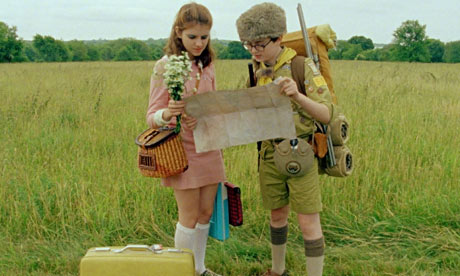
Moonrise Kingdom - Luke McKay

James King killed this review (ie, good) so what I have to say is only a continuation.  This movie indeed shares multiple Wes-isms with other Wes flicks, including sets and characters that are fashionably coordinated, the hilarious and endearing resistance to believable special effects, severe quirkiness of characters and dialogue, and careful organization of small prop combinations.  I’m a big fan of King’s sentiments that MK could be just another disc to slip into Anderson’s box set.  Each of his films seems to exist within the same Anderverse and is simply separated from the next by geography or chronology, though not a difference of opinion about the world: the past is really fucking important and people make mistakes--lots of them.  One crucial missing element was Anderson’s knack for unforeshadowed and heart-wrenchingly tragic loss.