HOM:

Giving you something to read on the toilet since 2009.

"The mistake lies in seeing debate and discussion as secondary to the recovery of meaning. Rather, we should see them as primary: art and literature do not exist to be understood or appreciated, but to be discussed and argued over, to function as a focus for social dialogue. The discourse of literary or art criticism is not to recover meaning, but to create and contest it. Our primal scene should not be the solitary figure in the dark of the cinema but the group of friends arguing afterwards in the pub."
-Don Fowler (1996) "Even Better Than The Real Thing"

Wednesday, March 31, 2010

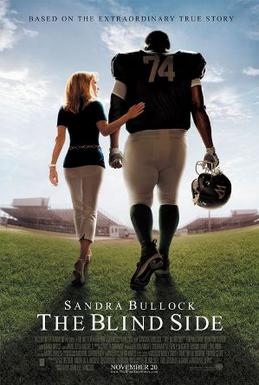
The Blind Side - Matty Yezerski


I am shocked. Shocked because I saw this movie in the theater (along with millions of other shmucks), instead of seeing it the way it was made to be seen...out of obligation to your parents after receiving it in your Christmas stocking with the other "straight to DVD" hits like Facing the Giants and Fireproof.

The only Southern accent that deserved a GG was the one coming out of Houston Nuts pie hole.

Sunday, March 14, 2010

Fantastic Mr. Fox


Are Wes Anderson movies annoying because the hipster at work or in your class constantly talks about how awesome, funny and piercing Wes Anderson movies are? Or are Wes Anderson movies annoying because they are just 'too-cool'? Or are Wes Anderson movies really good and fun despite people telling you how annoying or great they are? I don't know. I do know that this movie didn't put to rest any of the arguments about what his movies are--parts of this one were super annoying because I knew hipsters were going to love them, and parts were just really fun and creative and parts were almost too cool for school. Overall though, as I say about all his movies, I enjoyed watching it.

Some thoughts:

I'm worn out with George Clooney. I honestly think he has been in 48 of the last 52 movies I have seen. He is still good, though.

The animation was cool, I thought.

The movie didn't waste any time, which was cool.

This was a better movie than I thought it was going to be.

The way that Anderson and Tarantino keep making their movies with chapters is a good way to separate their movies from being seen as more than they should be. (This is a statement against people that love their movies too much.)

You should see this, it is a fun movie.

Bottle Rocket is still his best movie, though.


Alice In Wonderland


Tim Burton and Johnny Depp have teamed up to make some movies that are always going to 'be around'. Alice in Wonderland is definitely one of those movies. Their movies don't change the way movies are going to be made in the future. They don't redefine a genre. They (maybe exclude Scissorhands from this) are always fun or good but, for me, never amazing. They are, however always really clever, kind of 'weird', and worth seeing. In fact, I have seen most of their movies more than three times because they are always fun to watch. This movie is getting bad reviews across the board and I don't think it should. I also don't think it should get amazing reviews across the board. I think it should just be chalked up as another Tim Burton and Johnny Depp movie. There are a few reasons why this is not getting good reviews and I think by looking at these reasons we can kind of see what this movie is about and how if you have not seen it yet, it would be better to know what it is about before you hear someone tell you if it is good or not.

It sucks that this movie has come out right after Avatar. James Cameron spent 8 years making Avatar with a budget that was ridiculous. Avatar has indeed ch
anged the way we are going to view and make movies. Mainly, because it took 3-D too a whole other level. Tim Burton and Johnny Depp were both adamant about people needing to see this in 3-D. I'm not completely sure I agree with them. Maybe last year you would have needed to see it in 3-D. But this year, Avatar has done such awesome stuff with 3-D that it is going to take a director tons of money and tons of time to match what Avatar did. The 3-D in this movie is not Avatar-esque and therefore is going to be a let-down to anyone that has recently seen and been amazed by neo-ferngulley.
It also sucks that Johnny Depp has created such a huge following for being 'weird'. It makes movie-goers way too excited about seeing him be weird in his next movie. Indeed, he is really weird and Edward S-hands, Jack Sparrow, Willy Wonka and Sweeney Todd are all weird. Indeed, JD and all these characters are really fun to watch. The problem is, and I think it has finally come out in this movie, is that at some point all these characters run together and JD doesn't seem as novel and cool as he once was. He is still really awesome in this movie, even though he does a special effects dance and meshes all his weird characters into one. But I can see why people are getting tired of it and need JD to stare eerily stare into their soul like he did in Sleepy Hollow, Secret Window and Donnie Brasco. It should be said though, that in my opinion, he was still pretty good in this movie.

Any remake of a classic story is going to garner some bad reviews. Even more so if that classic story is one that people may say, "The chess board scene was just so magical for me when I was a kid." about. The people that are going to be jacked about going to see this movie are going to be the same people that most likely have strong emotions about the story of Alice in Wonderland. And, it is probably safe to say, that Tim Burton's interpretation of Alice in Wonderland is going to be freakishly different than the average European or American kid's. So, yeah, Burton's means by which to tell the story is really different than the children's books and focuses on stuff that may or may not have any importance to the average viewer, but if you haven't seen this or if you have, I don't think being pissed about the movie not doing what you wanted it do in reference to your childhood memories is a good thing to judge the movie on. You would do better to just let it be a totally new story.

Speaking of the story, however, it was told so slowly in this movie. Avatar was told slowly but slow story telling fell in the wayside while you were being entertained with shit floating around in front of your face. The 3-D in this movie, until the very last scene was not spectacular enough to keep you entertained while the story or acting was average.

All in all though, I think this was a pretty good movie. Don't expect it to be an Avatar or S-hands and don't expect it to bring back the memories of childhood. Just expect it to be another movie where JD and Tim Burton are really weird and creative and I think you will like it.

Saturday, March 6, 2010

Crazy Heart (a micro-review) - Buck Snodgrass


We’ve all known a Bad Blake or two—hauling ass to kick-up trouble, cause us grief, and brighten our lives. They have big hearts and little cash. You can usually spot a Bad by the inextinguishable twinkle in their eye and the deep, deep sadness tucked behind whiskey bottles, long laughs, and mischievous grins. Nobody loves as fully—or breaks your heart so completely—as a Bad. Bads are basically good but ultimately self-destructive, and if you love a Bad, as we all do, you’re going to get hurt. And that’s ok—it ‘s worth it. Never too late.


Crazy Heart tells the story of the ultimate Bad, and--to quote a Bad Blake original--how he began as "somebody and turned into somebody else."

Monday, March 1, 2010

Films Without Borders - Tim Johnston


The following is a great commentary on the 'globalisation' (or non-globalisation) of film by my friend Tim. Says a lot about the politics of marketing and what a movie really is 'for'. I think it is for a lot of things but the marketing and copyright issues are slow to catch up with the on-line demand. Netflix in the U.S. has cornered the market, I think, so far. Being able to watch on demand movies, through a subscription, on your television, computer, or hand-held device is definitely pretty amazing. I wonder too, though, what Netflix means for the 'movie-experience'. Having so much control over 'how' to watch a movie seems to really alter what the movie is 'for'. Obviously, this really only applies to 'new releases'. But even for movies that have been out for a while--does it change what they are for when the viewer decides how, when and where to watch it? Does it matter what a movie is for? I don't know for sure but there has to be something to be said for having 'your place' to watch a new movie (or even an older one). If the Golden Globes, Oscars and BAFTAS are going to celebrate themselves this time of year, we should at least benefit from some sort of option that makes seeing the movies before the awards shows, I think. I agree with Tim. I also agree with Ebert that the local cinema may be losing ground but still has a 'place'. Let's get this worked out, execs in power-suits. What if Netflix finds a way to get rights to new releases the day they come out? And what if my Netflix subscription was able to be used in the UK? And what if I projected the films from my computer out on to a wall in the plaza outside my apartment?

Tim:

During this year's award season it again annoyed me that films take so long to make it from their country of origin to cinemas abroad. This became especially clear during the Golden Globes which took place before many of its contestants were shown in the UK. How is this possible? They don't have to be translated and director's cuts are usually only undertaken for films exported from abroad to the US in case they are deemed not fast-moving enough for American audiences.

The negative effects of the industry's tardiness are manifold:
1. Because users don't want to wait so long to see a film that has perhaps already won some awards and that everyone is talking about they download it, depriving its makers of the reimbursements they deserve. Sandra Bullock and Jeff Bridges have bagged Golden Globes and will do the same at the Oscars but British filmgoers won't be able to see their films in time for the awards.
2. Films lack relevance. Michael Moore's Capitalism: A Love Story came out in the States in September 2009 when everyone was still talking about the economic crisis. Its UK release date is 26 February 2010, five months later. Even though I like the narrative style of his documentaries I am not going to watch it with a half year delay.
3. Foreign films are placed at disadvantage. By the time films reach audiences abroad, the hype surrounding them has often died down. One is less inclined to watch Mesrine: Killer Instinct ten months after its French release date than if it had come out at the same time.

In a thoughtful piece on film piracy, Mark Kermode has explained that the reason people download films is not that they are unscrupulous thieves but that users nowadays want to choose the way they watch a film, be it at the cinema, at home on the telly or on a portable gadget. That would give people who don't even want to be at the cinema the option of staying home and sparing us their popcorn-crunching and cell phone-ringing.

Just like the music industry took ages until it responded appropriately to Napster (with iTunes), the film industry is dragging its feet, blaming the users instead of recognising how demand has changed. To me it is unfathomable how in the age of globalisation it can take five months (Up), a year (Mesrine) or even longer (Ponyo) for a film to spread across the globe. The UK is especially slow as many films are translated and released in Germany and Spain before their untranslated versions make it to London. Does the British industry want us to download movies?

Any libertarian economist will tell you that when a market is constrained, the resulting trade is suboptimal. If you look at the majority of films coming out of Hollywood at the moment, I think the word suboptimal is flattering to say the least. If we had more power over what we can watch (through global video on demand) we wouldn't have to resort to the American mainstream films that are being dished out almost daily. A walk through Leicester Square should prove to anyone the severeness of the situation. Here are the options: Percy Potter and the Lightning Scar, James Cameron's Smurfahontas, It's (not very) Complicated, The WolfDouche, Alvin and the Chipmunks The Reekquel, From Paris with Travolta and -last but not least- Valentine's Day.
Faced with these options, I would risk legal prosecution by downloading a non-Hollywood film anytime.

Saturday, February 20, 2010

Crazy Heart - STEPHEN SANSOM


Since I was about sixteen years old, I've had an ongoing, rigged list of 'male movie characters that I intend to emulate.' The list is decidedly un-prejudiced toward a character's moral universe - James Bond is on the list. But others include both Wayne and Garth, Indiana, Sherlock, and at the vigorous age of twenty, I added The Dude. Ever since, Jeff Bridges has held a special, nirvana-esque place in my heart as an actor who can somehow convey a flawed yet perfect man (sc. 'dude') unlike any other.

Perhaps it is on account of the similarities between Bridges' character for the Coen brother's and Bad Blake, the washed up drunk of an has been country singer, in Scott Cooper's Crazy Heart that this movie had such an impact on me. They're both independent, have loyal friends, and don't take life seriously. Yet Bad is like Lebowski if The Dude had picked up a guitar, gotten ridiculously famous and wealthy, and then lost it all in a bourbon haze. The Dude is pure, untainted southern California stoner. Bad is a train wreck of four failed marriages, alcoholism, and most egregiously, musical impotency and a misplaced muse.

Crazy Heart is a film about a musician. But it is also a film about music, with scenes devoted to Bad with his guitar, including several three to five minutes of blissful Willie-country live performance. Music is beautiful, transcendent, but is also ugly and regretfully ephemeral. Bad hasn't written a new song in three years, and just like that silence when a guitar string stops its vibrating, Bad is on the verge of disappearing into sonic nothingness. It is only when he meets Jean (played my one of my top five, no, top three, the helplessly lubricious Maggie Gyllenhaal) that he begins writing again. She brings a vision of permanence into his life: she as a kid, a painful marriage in her past, and a life in Santa Fe. With this permanence comes the image of a 'self' he can call his own. He begins writing, falling love with her and her son, tying up loose ends of past marriages, and things begin looking up.

Anyone who watches this film will be struck by its reality. There are no flashbacks to fill in the painful blanks of the past. And there shouldn't be. Like live music, we are the sounds that surround us: the guitars, laughter, chatter, clinking of bottles - we are the people who experience the show with us: the young, old, happy, sad. The meaning of the show, the memories that stick with us, are created in the moment. Crazy Heart records this moment with striking clairity. And just like I will always return to Highway 61 Revisited andThe Golden Band to relive those musical moments, I'll think of this movie of music, pain, and hope as a gem in Jeff Bridges crown, worn begrudgingly by an actor who has never sought the life-altering Bad Blake limelight. I hope you'll dig it too.

This blog post is dedicated to the dedicated Kyle, whose encouragement got me to sit down and just write.

Thursday, February 11, 2010

He Came, He Saw, He Conquered & The Carter Documentary

In one, Alen Yentob, the creative director for BBC, follows a hip-hop star through the build-up to a performance at Glastonbury. In the other, QDIII, the son of Quincy Jones, sits with a hip-hop star on a tour bus and in a five star hotel in Amsterdam. The hip-hop stars have left their 'hood' and found footing in Europe for different reasons. Ultimately, both push an American dream and a brand by making music first and 'ruling the world' second--just in very unique ways.

One collects Richard Prince and Andy Warhol. The other collects the styrafoam cups that have held his cough syzrup. One speaks hesitantly about life as a 'gangster'. The other lives life as a 'gangster'. One meets with the President of the United States to talk basketball. The other, if president, would legalize all narcotics, lower gas prices, legalize prostitution in five states, and do away with child support laws. One hired Frank Gehry to build his basketball arena and government housing for his neighborhood back home. The other is bidding on Frank Sinatra's Plymouth. One used the documentary about himself to promote his non-profit and his own brand. The other used the documentary about himself to promote his brand and has now sued the producers of the documentary for breach of contract, breach of covenant of good faith and fair dealing, unfair business practices, fraud, invasion of privacy and injunctive relief.

Lil Wayne and Jay-Z are really different people. They both rap and they both seem to be intelligent dudes that work really, really hard on making music that they are proud of. I don't know exactly why they are both so interesting though. Both documentaries played heavily on poor kid from the ghetto becomes millionaire. I'm not sure if that is what makes their story interesting though. It's not so much about the 'pursuit of happyness' for either of them. They both just want to be 'huge'. Lil Wayne sells a million records in a week and immediately responds by saying the next record will sell five million. Jay-Z is asked about his business interests and he says he wants to change the way culture looks. I think this might be what is interesting. They define cool. Thet are the ones telling us what is coming next. Sociologists spend a whole lot of time trying to describe reality and show how culture moves. These two guys, using very different methods, tell culture how to move. They really might be right when they refer to themselves as kings.

Saturday, February 6, 2010

The Room - Tine 'Real Talk' Fjeldstad


It is rare that the presence of an audience around me in a cinema excites me to any level, it is after all supposed to vanish as the film elevates me to higher dimensions of escapism. This was not so much the case with The Room; the best worst film ever made. Not that the film itself didn’t elevate me to unknown levels of something (of what I have to admit I am not sure), but the audience is what made this particular Saturday evening unforgettable. The film is so awfully unintentionally ridiculous that it is well worth a watch in any circumstance, but if the chance presents itself to see it in a cinema: TAKE IT! If for no other reason that you get to lob plastic spoons at the screen as often as you like (in reality you lob them at the people in front of you, but it is one of the social advantages of this film that they will simply love you for it). Before I go any further, let me just say that this film is not for those of a strong feminist constitution; and that is simply because you are a woman.

The plot is simple enough – man and woman are engaged (mostly because he provides her with financial security), woman cheats on man (because she is evil), man saves boy next door from a drug-dealer (it’s ok, he’s going to prison), and, amidst it all, people the man and woman don’t know are eating chocolate of each other in their apartment.

Tommy Wiseau is the man behind this unforeseen success, a man with a strong vision, an indefinable Eastern European accent, a degree from an unnamed acting academy, unparalleled face-muscle density and the entrepreneurship to sell unknown numbers of fake leather jackets to fund his vision. He directed, produced, and, most importantly, starred in this rapidly rising gem on the cult-film-heaven. His interpretation of Johnny, the loving fiancé of the bitchy (such language is necessary in this case) Lisa, is, in short, indescribable. If most adjectives in my description come in negative form it is because words would never do The Room justice. I will however do a brief attempt to describe some of the prolonged and ‘tasteful’ sex-scenes that inspired many contorted facial expressions among the audience (and on the screen for that matter), as well as a mass-walkout: It looked something along the lines of a close-up shot of the rear end of a horse running – in slow motion. Considering this, along with pointless scenic shots of San Fran, an incredibly unsexy adulteress, a very sexy best friend in double denim, a lot of boys having a lot of fun tossing a ball to one another wearing cycling gloves or tuxedos, as well as mother that proudly proclaims she has breast cancer without ever mentioning it again, it is no wonder the film has risen to great heights of viewer participation. Just be sure to memorise the lingo and be ready to shout any of the following at appropriate moments:

Spoon! Cancer! Who the f*** are you? Hi Denny! Bye Denny! Cause you’re a woman! Unfocus! Alcatraz! Sestosterone! I put my evil inside you! You are tearing me apart Lisa!

Meanwhile, in San Francisco…

This film will have to be seen to be understood. I can safely say this though; The Room has changed my life – for the better.

Tuesday, February 2, 2010

Goodbye Lenin - Cage


Wolfgang Becker, in this movie, has non-obnoxiously linked together a bunch of characteristics of a 'fun' film with a lot of seriousness. In my opinion, this makes for the most enjoyable movies.

'Telling' history is always contentious and biased. You've got my 9th grade American History textbook vs. 'The People's History of the United States'. Then there is Genesis vs. 'The Origin of Species'. Not to mention, 3000 years or so of the white male/the victors vs. 50 years or so of a feminism/marginalized account. 'Goodbye Lenin' is an attempt at a re-telling of the fall of socialism and its impacts in East Berlin, specifically. The point is that history not only happens in ways we don't always want it to, but history also is not always told in the way we want it to be told. Becker, the lead actor Alex, Rick Bragg, and I agree that sharing a narrative of history is more fun and more meaningful when it is sensationalized in a way and simply made more personal. This is the first characteristic of movies I like that this movie encompasses.

Alex's mother, a staunch socialist, is in a coma for the fall of the Berlin wall. When she comes-to her world as she knew it no longer exists. The doctors tell Alex that if she experiences too much shock or stress that she will fall back into her coma or die. The ensuing action depends on Alex's adeptness at re-creating a world for his mother that no longer exists--a world that he fought and protested against and thought he hated. This is one of the most fun premises on which to make a movie. This is the second characteristic of movies I like that this movies makes use of.

When Alex's mother gets bored she demands that Alex set up a television for her to watch. Were she to watch a current news program she literally might die. Therefore, Alex and his aspiring film-director comrade take it upon themselves to tell Alex's mom, carefully how 1989 'really' happened. Son of Rambow, Broken Embraces, Be Kind Rewind, Sullivan's Travels, Cinema Paradisio, The Big Picture, Boogie Nights, Jay and Silent Bob Strike Back, Adaptation, are all movies that I really like. These are all movies about making movies. I think it is a way for 'film-school' directors to substantiate either how serious or un-serious they take themsevles. I think it is also a really fun way to tell a story or to show how they, themselves like to tell a story. Watching Alex and his friend tell the story of how they wished the events of 1989 had occured is really fun. This is the third characteristic of movies I like that this movie does really well.

After a series of really good cover-ups, Alex finally falls asleep on the day his mom decides to get up and walk. As she makes her way through a foreign land that is her westernized kitchen, the homosexual neighbors moving in, and the Coca Cola advertisements outside her apartment, she makes it to the main road in time to see the statue of Lenin being airlifted out of East Berlin. As the sun sets, Lenin, although rigid like a statue, seems to nod towards Alex's mother in a final goodbye. As Lenin is drawn out into the sunset, Alex and his sister are there to catch their mother. Hollywood has done a lot of harm to cinema but they have done a lot of cool things as well. Sunset, cathartic slow-mo is almost always lame/sheshish/kitsch/poofter, but is simultaneously almost always enjoyable (depending on how cool the rest of the movie is or was). This is the fourth characteristic of movies I like that this movie does really well.

The final thing about this movie that is really likeable is that the seriousness of 1989, the seriousness of family-lies, the seriousness of losing a family member, the seriousness of mixing cultures, the seriousness of oppressive regimes, is not lost in the 'cool'/'fun' stuff that movie makers can do. In fact, I think it is enhanced in this movie. At some level it seems really necessary for us to contextualize all this 'serious' crap that surrounds us and to do this with humor or whatever works well in movies. Something about the characters being on a screen makes it easier to do. So when we tell a story in an unapologetically biased way, or enhance the importance of unique/seemingly-un-special parts of day-to-dat life, or see how someone goes about deciding how to do the things they do, or put a sunset in slow motion, we put the percieved seriousness of life in perspective. A movie that does this is almost always a movie that I like.

The Blind Side - Tim

The Blind Side

With only one day to go before the Academy Award nominations are announced, it seemed appropriate to watch The Blind Side, for which Sandra Bullock has won this year's Golden Globe for Best Lead Actress. 2009 was Bullock's most successful year, from a box office point of view. She is also one of the most ambivalent actresses in Hollywood. One moment she stars in great films like Speed, A Time to Kill or Crash; the next moment she somehow ends up on the sets of movie mishaps such as Speed II, Premonition and, most recently, All About Steve, for which she received her second Golden Raspberry nomination.

In the case of The Blind Side, Bullock plays Leigh Anne Tuohy, a copybook Desperate Housewife: $18 salads with the girls from the country club in between driving the kids from school to football/cheer-leading practice and all the while looking amazing in white Capri pants. Into this supposedly perfect life stumbles Michael 'Big Mike' Oher, an underprivileged black kid from the poor part of whatever racist town in Tennessee they live in. 'Big Mike' truly deserves his name and turns out to be a pro-football player but he is also shy, insecure and has some learning disabilities. Leigh Anne decides to take him under her wing. If you have detected parallels to Precious I cannot blame you.

It is not necessary to elaborate any further on the plot as it is mind-numbingly predictable. And I mean the kind of predictability that enables you to mouth entire sentences before you hear them. Sandra Bullock, who is in just about every scene, delivers an alright performance - but by no means exceptional. It thus remains a mystery what she got that piece of gold for. Oh, I know, she put on a Southern drawl. Yep, always an award-guarantee, that funny talking, darn tootin'.

As a principle, I do not quit films before the end. Perhaps I hope that something at the end will suddenly make me appreciate a film that hitherto was a joke. As you would expect, this rarely is the case, although I must admit that it was worth sitting through the tedious last hour of The Mist to see the end. To put it mildly, I would not have put up a fight if someone had called me during The Blind Side with the prospect of meeting up at McDonalds Leicester Square to go scum-watching. As much as I like seeing Bullock in tight white pants: I got bored. Yes, even of Sandra Bullock's moneymaker!

Apart from the predictable plot and cheesy music, it was also the lack of originality that bothered me. Obviously the films is original to some extent because it is based on a true story, and as I found out later, follows it quite accurately. However, the theme of the underprivileged black kid is stale and much better implemented in Precious. For a film that wants to show us ambivalently how a superficial soccer turns philanthropist and a kid from the hood remain innocent, there is a lot of black/white painting. The teams 'Big Mike' plays against are always evil and their players racist. Overall it seems like everyone is racist, even teachers. Meanwhile the black kids in Michael's hood are - wouldn't you know it - jobless and crack-dealing Gs who want to 'tap' that foster mother of his. As Michael enters the scene, the lives of the Tuohys seem to revolve around nothing but him: How he needs to pass an exam, practice football and buy a proper shirt. Not once do we see them engage in an activity that has nothing to do with Michael, which makes the film lose credibility.

To leave on a good note, the interactions between Bullock and Quinton Aaron (Michael) are rather moving and I felt strangely reminded of Ryan being accepted into the Cohen Family in The OC. Talking of which, if The OC isn't too kitschy for you, than neither is this. Yet, bear in mind though that an OC episode is a half an hour long. This film is two hours of Hollywood at its worst (kitsch).
With regards to tomorrow's nominations, you are probably wondering whether Sandra Bullock should be nominated for an Oscar. Is a nomination necessary? About as necessary as it was to make a sequel to Speed, if you ask me.