http://30for30.espn.com/
http://30for30.espn.com/bill-simmon-essay.html
I am jacked about this. First one shows tonight at 8:00 ET on ESPN. Reviews to come.

Tuesday, October 6, 2009

Sunday, October 4, 2009
Bright Star - Worth Seeing (By James A. King)

“A Thing of Beauty is a joy for ever: Its loveliness increases; it will never Pass into nothingness.”
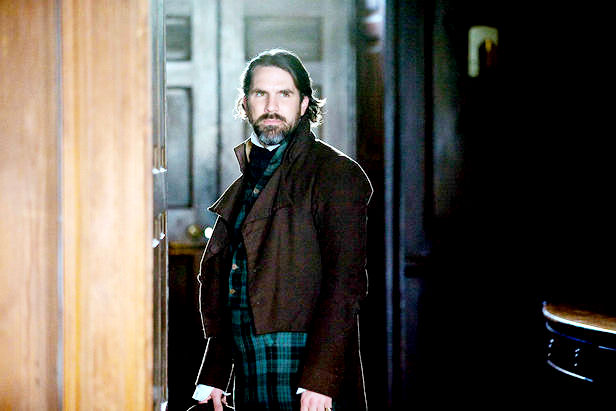
Bright Star is first and foremost beautiful. Cinematic beauty shines through every frame: beauty in the perfect light on the heath, in the first flirtations between Fanny and Keats, and even in the signature tartan onesie of Keats’s gregarious, awesome-in-every-scene, friend Brown. Following Keats’s lead, director Jane Campion has created a space for viewers to lose themselves in the sensuousness of words and images. Though the doomed love story between the dying poet and his levelheaded love is presented realistically, Bright Star subtly filters that reality through the poet’s own heightened sense of beauty in the everyday. Notice how bright the colors, perfect the speech, and crisp the costumes remain up until the later, Keats-less scenes in the movie, where the color dims and objects become viewed through windows and mirrors rather than through touch and sense.
A lesser movie about a Romantic poet’s love affair would not have been able to tow the line between the real and aesthetic—either becoming too poetic and artsy to stomach or too dusty and “period drama” to say anything about a poet obsessed with beauty. If the acting had not been so good or so focused on maintaining the human drama, the movie might have been lost in the lushness and poetic abstractions; but as it is, genuine emotion about real world concerns (income, sickness, etc.) complements the film’s exuberant visuals to create a movie both grounded and ethereal. It could be said, that Bright Star’s content follows its characters by fusing Fanny’s level-headedness (she liked house parties and made money) with Keats’s dreaminess (liked lying in tree-tops and owed money). For instance, there are un-idealized scenes of Keats’s dingy penury in London and then there are scenes like when Fanny walks through a field of blue flowers clutching a love letter from Keats, and the letter’s words melodically play in voice over and the flowers become just a bit glowy in their blueness and the camera a bit tipsy in following Fanny into the flowers. Scenes like this speak more to how Keats might have imagined her reading the letter, implying that treasured memories and imagined images of things hoped for are always infinitely re-playable and in more glossy high def than the actual occurrence. This scene in particular embodies Keats’s idea of a “thing of beauty,” a beauty existing in the imagination and therefore invulnerable to decay or death—a sustaining artistic and personal belief for a man that knew his own life would pass before the age of 26.
So if this movie is so deep and pretty, why am I giving it a Worth Seeing and not a Freaking Revolutionary? I’m going to evade this question with a Wikipedia definition of Keats’s “negative capability:” “when man is capable of being in uncertainties, Mysteries, doubts without any irritable reaching after fact & reason.” So the only way that I can answer this question without becoming irritable is to say that I’m uncertain where this movie’s value lies—and think that is the point. It doesn’t do anything revolutionary in moviemaking, and I doubt whether it will change a single life, but rather Bright Star simply gives viewers an opportunity to experience and meditate on beauty—isn’t that enough? If you think so, be sure to stay for the credits.

Moon - (By Timothy Johnston - http://timothyawjohnston.blogspot.com/ )
Moon
 Seen at: Odeon Panton, London 03/10/2009
To be fair, I was prone to like this movie from the start:
An unknown director, a (fairly) fameless lead actor, a soundtrack composed by Clint Mansell and, finally, a budget, which at $5 Mio. is low for a Hollywood movie.
In a nutshell: Sometime in the future (it is never mentioned when exactly) we earthlings have finally figured out how to provide ourselves with sustainable energy: by harvesting helium-3 from lunar soil and sending it back to earth.
Sam Bell (played by Sam Rockwell) works on the only refinery up there all by himself on a three-year contract. His only companion is a robot called GERTY (voice of Kevin Spacey), essentially a metal box with a display of a smiley face on it. He has two weeks left, when he starts seeing things and the plot pans out...
First off, Sam Rockwell is absolutely phenomenal.
And he must be, since this film is 100 minutes long and he is the only actor, apart from a few people in transmitted video messages. I do not want to give anything away, but it won't do any harm to disclose that at some point in the movie he plays a very dominant character, then a submissive one and finally something in between. Sam Rockwell is the pillar of this movie and I believe that he will be associated with this role in much the same way as we think of Lester Burnham from American Beauty as soon as we hear GERTY the robot talk. Speaking of which, Spacey does alright as far as you can judge a speaking role - but perhaps a less prominent voice would have been more effective. Hearing the robot talking, I was constantly waiting for Spacey to suddenly turn up and walk onto the scene. Although I understand that the name Spacey looks good on a movie poster, this is the one thing I hold against Moon.
Does the film have a deeper meaning? That depends on whether you allow it to. The theme of moral boundaries to the use of technology is definitely discernible, but never in a pretentious way. Also, the concept of a robot behaving in a human (thus fallible) fashion and humans assuming the roles of machines is developed. Again, no fingers are pointed, but it is there for you to find if you want to find it. By giving GERTY such a simple design (the scope of his moods reaches from ;( to :) the director makes fun of the way in which people - for lack of eloquence - overuse smileys in modern communcation tools, but again, in a non-condescending way.
 If I didn't know better, I could swear that Moonwas directed by Darren Aronofsky: it has the suspected conspiracy and paranoia of Pi, the loner spirit ofThe Wrestler,mixed with the hallucinations of Requiem for a Dreamand, finally, the artful cinematography of The Fountain. And obviously, when the film opens to the atmospheric tunes of Clint Mansell, associations with Aronofsky's work are inevidable.
If you enjoyed the films mentioned above and don't mind toggling your brain to Sci Fi for a good one and a half hours, you will love this film as much as I did. It is the type of mind-boggling film where you could be turning to the person next to you asking: "Does any of this make sense?"
But you don't.
Saturday, October 3, 2009
Inglourious Basterds - Intense, Must See, Fun
 Tarantino movies are easy to hate. It can be really annoying to hear people talk about how much they love Tarantino movies (think of the dude in the scene of Annie Hall when they are at the theatre waiting in line and he is giving all his NYTimes-esque thoughts on film). I think this is why people hate his films - he makes it really easy for lots of people to think his movies are cool. Lots of people talk about how awesome Tarantino and Robert Rodriguez are. For the most part this crowd is too cool for Rom-Coms but also too cool for indie film festivals. They kind of meddle in this gray area of their Netflix recommendations that are given to them based on their giving five stars to Cool Hand Luke, Shawshank Redemption ("dude, I know it's cliche but it's like one of the best movies ever" - a common phrase amongst this group), Tombstone and Garden State. So, Tarantino and Rodriguez are really good at making these movies that have true characters playing characters, cool kind-of retro, loud soundtracks (Rodriguez does most of his own, as in writes and performs it), and super catchy dialogue but not like Coen Brothers dialogue; it's more just about being as freaking 'cool' as possible. THUS, when dudes talk about how awesome Tarantino and Rodriguez are, it can kind of come off as them being played the fool, cause T. and R. were gunning for them and they got em' (they would not love this review because they would think it misses the point of all that is T.). It's easier to think that T. and R. are over-done and then you don't have to admit to yourself that you aren't as unique of a movie lover as you once thought. Admitting to like T. movies is similar to admitting you watch The Hills, both are sensational but you still watch it.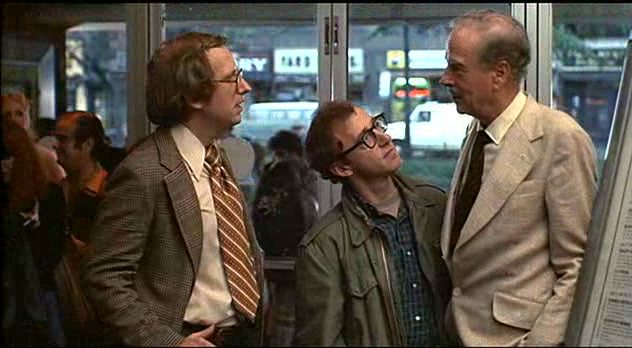


With all of that said. I really liked this movie. Christopher Waltz is going to dominate some awards shows. He deserves it too, I mean he made this movie. I think it might be one of the most complex characters that has ever been written into a T. movie, which is kind of saying a lot. But Waltz just killed it. It was really refreshing too that he spoke German as a German, and French as a German, Italian as a German, and English as a German. This is admirable, not just because speaking a bunch of languages is difficult, but movies like The Reader are almost unwatchable to me cause of the stupid crap they do with accents. Subtitles are a great thing and directors/producers should make use of them.
Melanie Laurent was also really good in this. She reminded me of a cooler version of her character in Indigenes - which is a bad ass movie btdub.
The best part of the movie and the reason it is a must see, intense, and fun movie, is the basement pub scene. It lasts for freaking ever but, and even if you aren't a Tarantino fan, only Tarantino is able to pull of scenes like it. To involve so many actors, so many personalities, so many story lines, and so many possible outcomes followed by the one outcome you didn't think of, is super cool. My only critique of this scene is I would have done without the one sentence that was used to explain how the German officer figured out they were fakes. The spy, phony guy orders three drinks and uses the british hand gesture for '3' as opposed to the German version of '3'. I think most people could have picked up on it, especially lovers of Tarantino movies that pride themselves on being so cultured and being one's that always "get it."
I really liked this movie. I missed Uma but I'm sure she'll be back. I'm jacked about Christopher Waltz; that dude is going to be in tons of huge movies now. The Weinstein brothers are decent at letting writers and directors do what they want to do. There are probably several thousand WWII movies but this might be the most fun one. T. considers it his life's work. He apparently worked on the script for 10,00o hours, ha.
Thursday, October 1, 2009
Wednesday, September 30, 2009
Mesrine: Killer Instinct - Must See
 Vincent Cassel along with Audrey Tautou, two of the best actors alive, have talked of their desire to only act in french films. As long as they keep making films as cool as their most recent ones (Mesrine, and Coco Avant Chanel) then more power to them. I mean, this movie is one of the best gangster movies ever made. The only reason I say this is because of Vincent Cassel.
 Gangster movies rely heavily on the humanism of the gangster being depicted. Denzel made American Gangster a good movie. Vincent makes Mesrine a great movie. So often gangster movies glamourize the life of crime. Cassel, as is often true of this genre, evokes sympathy. But it is a different kind of sympathy. Usually it is a sympathy that comes with rationalization. This time, you are just like, "Man, that would kind of suck." As much of a badass Mesrine might have been, Cassel makes you truly realize that killing people just sucks, make no bones about it. It is never cool to beat your wife while your child watches. You hate him so freaking much but ultimately you just want him to call it quits and move to the Philippines and start a non-profit. But, he doesn't and makes you really believe why he can't. Sure, John Dillinger allowed customers in banks to keep their money and fought the 'system', but Mesrine/Cassel is a ruthless son-of-a-bitch chasing notoriety and ultimately, worth within the facade of post-war masculinity.
This movies is as much about father-son relationships as it is anything else. Had Mesrine's father been more of a 'man' then maybe Mesrine would have been able to listen. But having been forced to experience the inexcusable, cowardice of the fraternal army life Mesrine was well beyond his father's simplistic family values of pre-world war westernization. As I have alluded to before, getting a nine to fiver was not in his five year plan.
When I read Wittgenstein, Marx, McIntyre, Dennett, Dawkins, the 'brights', and many other thinkers, I am often left wanting. The phrase I have used to lessen their attempts to say 'something' (which I admit, saying this may be just because I don't feel like spending the hours it requires to understand what they are saying) is this; "they obviously never spent time in a dug-out." What I mean by this is that they would never be able to carry on a conversation with the guys I grew up playing baseball with. One might ask, "What does it matter that the guys you played baseball with think Daniell Dennett is a poofter?" It matters because my friends from baseball are more authentic and more a true representation of humanity than most philosophers have ever experienced. Ludwig Wittgenstein grew up with billions of dollars from his father's businesses at his disposal. His brothers and sisters were all first class musicians that commissioned the greatest artists and composers of pre-world war Austria. This means they paid people like Wagner $25,000 to write pieces for them to perform. Their father encouraged all of this as composers came to their castle to share their new creations. I played third base in my high school glory days. The guy's father that played shortstop next to me for my whole life was known for getting super wasted and challenging people to races out in the street outside the bar (no joke, this guy's Dad was about sixty pounds over weight and he beat everyone on our baseball team in a race multiple times; it was really incredible). My point is this, if you can't speak to my friend that played shortstop and was useless on Saturday games because he was still trippin' on acid, then I don't think you have that much to say that is worthwhile.
Mesrine addresses issues that are timeless and are appropriate for a college psychology, economics, philosophy, religion, and english class as well as my friend the shortstop. This is why Mesrine is a 'must see' film. Ultimately though, you should see this if you want to see the performance of the year by Cassel.
Tuesday, September 29, 2009
RoboCop - Freaking Revolutionary, Must See, Fun

It is rumored that Darren Aronofsky (The Wrestler, The Fountain, Requiem for a Dream) wants to do a re-make of this film. As awesome as this would be I don't know if it is possible to do anything more rad than what has already been done. He also has been trying to get funding for a movie that features Mark Wahlberg as a boxer. Apparently Wahlberg has been training for like five years for this role. I would see both movies were he to make either one of them. I'm already too jacked just about the idea of either movie. At any rate, RoboCop is one of the most timeless movies to ever be made. If your girlfriend or boyfriend does not think Robocop is one of the best movies ever made then he or she sucks and you need to move on. I'm not even going to waste time with a synopsis because if you have not seen it then you just need to see it already. People have freaking wrote dissertations on it; which is braggable.
Themes that have been copied a hundred times over include; dualisms in human nature, man vs. machine, the inevitable decay of American industrialism, Christ figures as heroes, rebirth, and weapons proliferation. When you combine this stuff with splatter punks and Clint Eastwood-esque one liners then you have one of the best movies ever made.
RoboCop is what movies are supposed to be. An amalgamation of surrealism with really fun stuff - the Ford Taurus was chosen as the badass car to be featured while the Pontiac 600, Ford Taurus' competition was renamed 6000 Sux and given to the bad guys. It is often really annoying to see a bunch of indie films that work really hard to evoke all these emotions in the audience which is usually pseudo-intellectuals or post-Bowling for Columbine, non-athletic teenagers that love The Shins. We would be better served with movies that remind us that non-Ingmar Bergman films are supposed to be fun. Even Bergman films can be fun if you are present enough to recognize that you are watching a movie that was shot, cut, and produced to be fantasy and promote a thesis. I think we forget that movies are movies. Obviously there are movies like Shindler's List that is not fun at all, in fact it just kind of sucks to watch movies like this but there is a time and place for each. My point is this, let's not forget that movies can just be really fun events and we don't have to write really witty responses to movies about teenage pregnancy. Just say a movie is fun and be done with it.
RoboCop is fun and you need to see it if you haven't. If you have seen it then you need to see it again. If you have seen it like a hundred times then you are cooler than everyone else.
Monday, September 28, 2009
Away We Go - Worth Seeing, Fun

The Beat Generation (they knew about being hipsters before hipsters decided to ride fixed gear bikes, wear flannel, and skinny jeans) would love this movie and then tell you that it's not raw enough and too hollywood. Now all hipsters have driven out west and settled in Silver Lake (a stone's throw from hollywood) - they keep kicking themselves. Sam Mendes, the director (American Beauty and Revolutionary Road {don't see this one}), held a Q & A at the Tricycle Theater after the first UK screening of this movie. He is really smart and had some cool stuff to say. He was chilled out and said he really just wanted this movie to tell a cool story that his friend Dave Eggers (Real World cast member) wrote with his novelist wife, Vendela Vida.


John Krasinski (The Office) and Maya Rudolph (SNL) play the couple that is trying to figure out their life. They are in their thirties, pregnant, and un-married. They feel stuck and boring where they are and decide to set out and visit old friends in cities around America to find a new place to live (this is a crappy synopsis but I don't really care about writing synops(i)?). I will say this however, John Krasinski was really great in this movie. He and BJ Novak were friends at Harvard and when they were casting for The Office Novak said they should hire Krasinski (I can't back up any of the facts of this story). I never thought he was that great of an actor but he was good in this.
Traveling around America is nothing new for movies. If I ever make a movie I think it will have tons of friends just riding around in cars listening to music. This movie has lots of that which is soundtracked by Alexi Murdoch (this link is awesome, don't pass it by) who is very Iron & Wine-esque; which makes for great driving into the sunset montage scenes. That's why this movie is 'fun'. It is 'worth seeing' for the following reasons: 1) It has a happy, emotional ending which everyone loves, 2) Maggie Gyllenhal, Catherine O'Hara, Jeff Daniels, and Allison Janey are hilarious and 3) it is a cool picture of America and finding a place in America in the age where we all have liberal arts degrees and wouldn't even think about getting a real job for forty years and calling it a day.
With that said, it is kind of a Revolutionary Road but a whole lot less intense. I thought about the song on Wilco's new album, 'Solitaire' while watching it. My brother and I have an ongoing conversation about, what we call, 'freaks'. (Samford grads don't pass up this link) These people that wake up every morning and study a fourth language, memorize poetry, practice their rhetoric, and try and decide if they want to run for office, start a non-profit which enables women in the third-world to start businesses, or join a fortune 500. The main characters in this movie give credence to the life that I think I will choose for myself, though speaking at conferences at Willow Creek about how I am saving the world is attractive. To reference Malcolm Gladwell again, what if instead of being Outliers in the sense of business, politics, or academia, we were Outliers in the sense of being really awesome moms, dads, brothers, sisters, and friends? What if we put 10,000 hours into our families and friends opposed to a sport or a job. I suppose their is some balance to be had in there but I like spending time with my friends more than I do memorizing poetry.
Subscribe to:
Posts (Atom)